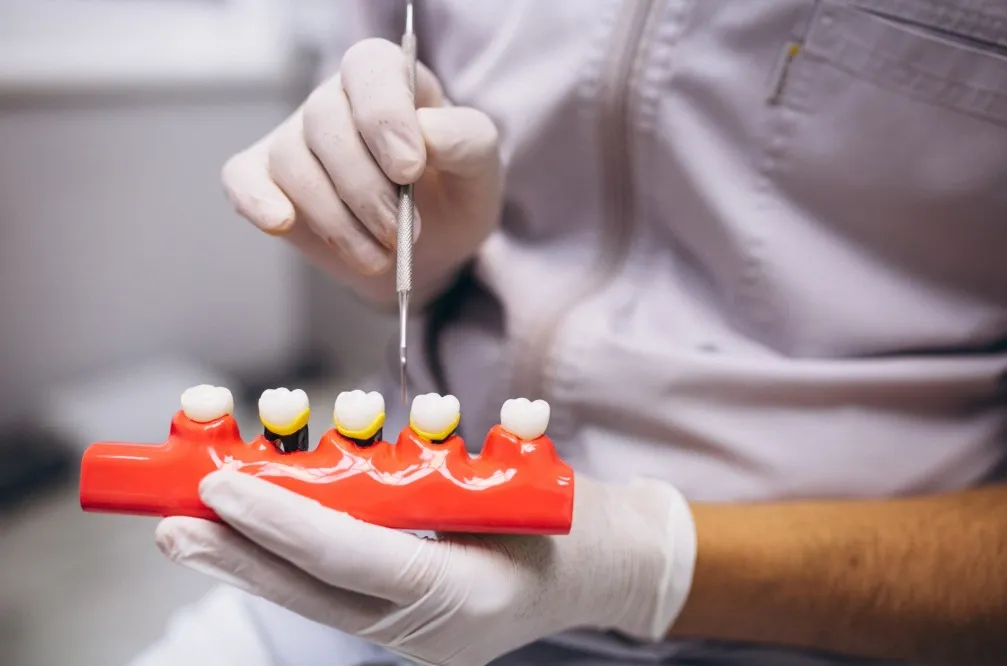
Zirconia crowns are tooth-shaped restorations used to protect teeth that have become weak, heavily filled, fractured or structurally compromised. The material is valued for its strength, biocompatibility and natural appearance. At VIN SMILES Advanced Dentistry, Dr Neha Sachdeva assesses the remaining tooth structure, bite pressure and location of the tooth before recommending a crown.
A crown should not be selected only by material name. Its success also depends on diagnosis, tooth preparation, fit, bite adjustment and daily maintenance.
When may a zirconia crown be recommended?
A zirconia crown may be considered for:
- A tooth weakened by extensive decay
- A cracked or fractured tooth
- A tooth with a large failing filling
- Protection following root canal treatment
- A severely worn or misshapen tooth
- Replacement of an old or damaged crown
- Restoration over a dental implant
- Support within a dental bridge
Not every damaged tooth requires a crown. Smaller defects may be managed with a filling, inlay or onlay. The most conservative suitable restoration should be considered before removing healthy tooth structure.
Types of zirconia crowns
Zirconia crowns are available in different forms. Monolithic zirconia is made from a solid block and is commonly selected when high strength is important. Layered zirconia includes aesthetic ceramic over a zirconia base, which may improve translucency in visible areas.
Newer high-translucency zirconia materials can provide a more natural appearance for front teeth while maintaining useful strength. The choice depends on tooth position, available space, bite forces and cosmetic expectations.
Selecting zirconia crowns in Saket
Patients comparing zirconia crowns in Saket should ask about the complete treatment process rather than focusing only on price. A crown that looks attractive but does not fit the tooth or bite correctly may cause sensitivity, gum irritation or premature wear.
A proper assessment should determine why the tooth became damaged. If grinding, an uneven bite or untreated decay caused the problem, that factor should be addressed to protect the new restoration.
Patients can ask to review the proposed shade, shape and material before the crown is finalised, particularly when treating a visible tooth.
What happens during treatment?
The tooth is first examined and prepared by removing damaged tissue and shaping it to receive the crown. An impression or digital scan is then taken.
A temporary crown may be fitted while the permanent restoration is fabricated. Once ready, the zirconia crown is checked for:
- Marginal fit
- Contact with neighbouring teeth
- Bite comfort
- Shape and proportion
- Shade compatibility
- Gum response
Adjustments may be made before the crown is bonded permanently.
Questions to ask before choosing a crown
A useful consultation should answer:
- Can the tooth be restored predictably?
- Is root canal treatment necessary?
- Why is zirconia suitable for this tooth?
- Which type of zirconia will be used?
- Will a temporary crown be provided?
- How should the restoration be maintained?
- Is a night guard advisable for teeth grinding?
How long can a zirconia crown last?
No crown has a fixed lifespan. Longevity depends on oral hygiene, bite forces, gum health, diet and habits such as grinding or chewing hard objects. Brushing, flossing around the crown margin and attending periodic examinations remain essential.
If you have a fractured, root canal-treated or heavily restored tooth, book an evaluation with Dr Neha Sachdeva to determine whether a zirconia crown is the right option.
Keywords