Children’s dental visits are most successful when they begin before pain or fear becomes associated with treatment. Kids dentistry focuses on prevention, early diagnosis and age-appropriate care for developing teeth. At VIN SMILES Advanced Dentistry, Dr Neha Sachdeva considers a child’s dental needs, comfort level and stage of development during each appointment.
Regular dental care can identify concerns early, when treatment is generally simpler and less intimidating for the child.
When should a child first visit the dentist?
A first visit is commonly recommended after the first tooth appears or by the child’s first birthday. This early appointment may not involve treatment. It is an opportunity to examine tooth development and guide parents on brushing, feeding habits and cavity prevention.
Waiting until a child has severe pain can make the first dental experience stressful. Preventive visits allow children to become familiar with the setting while they are comfortable.
What does kids dentistry include?
Children’s dental care may involve:
- Routine dental examinations
- Cavity-risk assessment
- Fluoride application
- Dental sealants
- Tooth-coloured fillings
- Care for chipped or injured teeth
- Monitoring of tooth eruption
- Guidance on thumb-sucking habits
- Early orthodontic evaluation
- Management of dental infections
- Advice on brushing and diet
Baby teeth eventually fall out, but they still help children chew, speak and maintain space for permanent teeth. Untreated decay can cause pain, infection and difficulty eating.
Kids dentistry support in Defence Colony
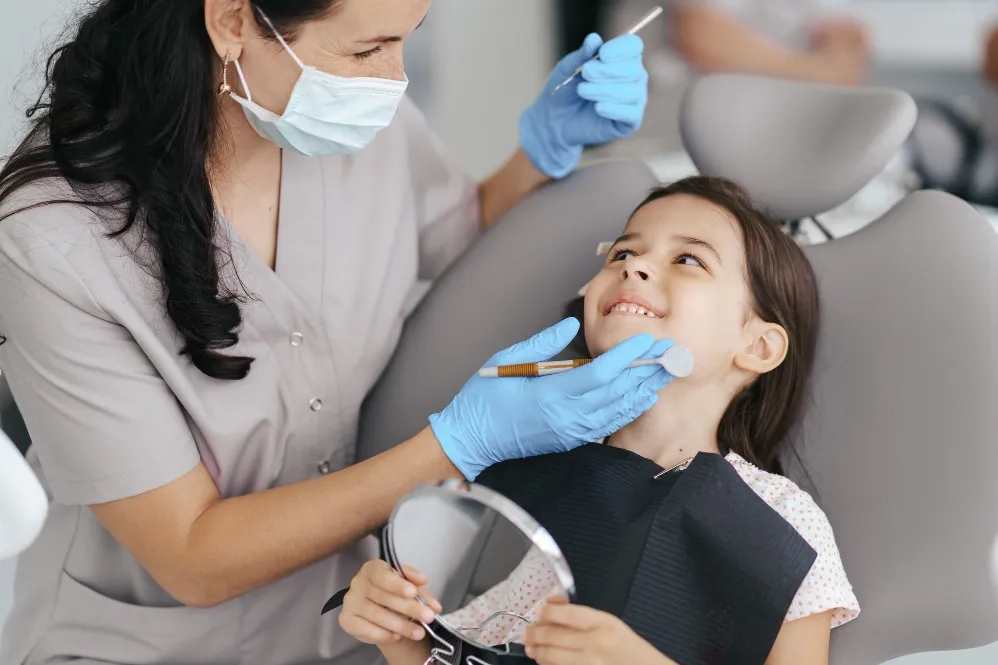
Parents looking for kids dentistry in Defence Colony should consider how the dental team communicates with children. Simple explanations, a calm pace and age-appropriate language can help a child understand what will happen without creating unnecessary fear.
A supportive appointment should also involve the parent. Guidance on home care, snacking patterns and warning signs gives families practical ways to protect the child’s teeth between visits.
How can parents prepare a child?
The language used before an appointment can shape the child’s expectations. Keep explanations simple and positive. Avoid describing personal negative experiences or using treatment as a threat.
Helpful steps include:
- Schedule the visit when the child is usually rested.
- Explain that the dentist will count and clean the teeth.
- Avoid promising that nothing will happen.
- Bring relevant medical and dental information.
- Allow the dental team to guide the conversation.
- Praise cooperation rather than demanding perfect behaviour.
Books or role-play about dental visits can also help younger children become familiar with the process.
Why do children develop cavities so quickly?
Children may be more vulnerable to decay because enamel on baby teeth is thinner. Frequent exposure to sugary snacks, sweet drinks or milk during sleep can increase risk. Inadequate brushing and closely spaced teeth can make plaque harder to remove.
Parents should supervise brushing until the child can clean every surface effectively. A small amount of age-appropriate fluoride toothpaste may be advised based on the child’s age and cavity risk.
What if a child is already afraid?
Fear should be approached gradually. The first visit may focus on conversation and a simple examination rather than completing every procedure immediately. Short, successful appointments can build trust over time.
Dr Neha Sachdeva can assess the child’s oral health and explain which concerns need prompt attention and which can be managed in stages. Consistent preventive care helps children view dental visits as a normal part of staying healthy rather than something reserved for emergencies.
Keywords