Wisdom teeth are the final permanent molars to develop, usually appearing during the late teenage years or early adulthood. Some erupt normally and remain healthy, while others become trapped, grow at an angle or create repeated problems. At VIN SMILES Advanced Dentistry, Dr Neha Sachdeva examines the tooth position, surrounding gums and nearby structures before recommending wisdom tooth surgery.
Removal is not necessary merely because a wisdom tooth exists. The decision should be based on symptoms, disease risk and clinical findings.
Common signs of a problematic wisdom tooth
An impacted or partially erupted wisdom tooth may cause:
- Pain at the back of the jaw
- Swelling behind the last molar
- Difficulty opening the mouth
- Food trapping around the tooth
- Persistent bad taste or bad breath
- Red or bleeding gum tissue
- Repeated gum infection
- Decay in the wisdom tooth
- Damage to the neighbouring molar
- Jaw stiffness or tenderness
Symptoms can improve temporarily and then return. Recurrent episodes often indicate that the underlying position of the tooth is making the area difficult to clean.
When can monitoring be appropriate?
A wisdom tooth that is fully erupted, functional, painless and easy to clean may not require removal. An unerupted tooth may also be monitored if it is not causing disease or threatening nearby structures.
Periodic examinations and X-rays help identify changes that may not yet produce symptoms. Monitoring is especially important because cavities, cysts or root damage can develop without obvious pain during the early stages.
Wisdom tooth surgery assessment in Lajpat Nagar
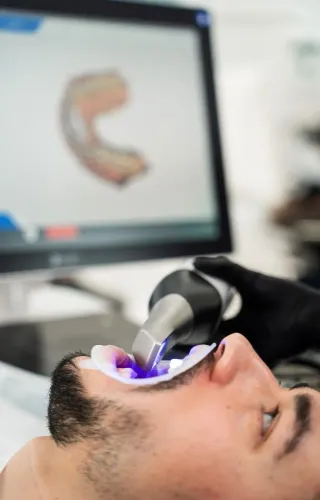
Before wisdom tooth surgery in Lajpat Nagar, a clinical examination and dental X-ray are used to study the angle, depth and root shape of the tooth. For lower wisdom teeth, the dentist also assesses how close the roots are to the jaw nerve. Upper teeth may be evaluated in relation to the sinus.
This information helps determine whether a straightforward extraction is possible or a surgical approach is required. Complex positioning may need additional three-dimensional imaging.
What happens during the procedure?
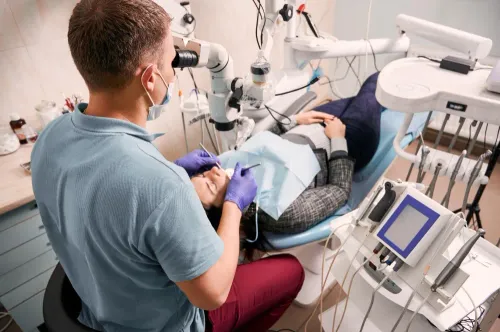
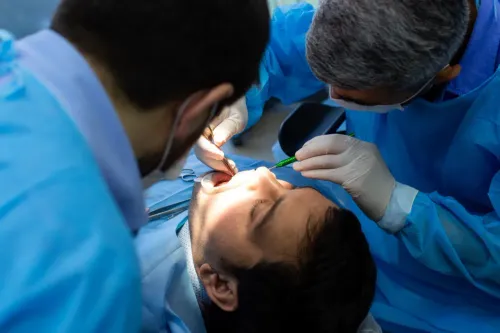
Local anaesthesia is used to numb the treatment area. If the tooth is impacted, a small opening may be made in the gum. A limited amount of surrounding bone may be removed, and the tooth may be divided into sections to allow controlled removal.
The site is cleaned, and stitches may be placed when necessary. The duration depends on the tooth’s position and complexity.
How can recovery be made easier?
Swelling and tenderness are common during the first few days. Following postoperative instructions can support healing and reduce complications.
Useful precautions include:
- Apply a cold compress as advised.
- Eat soft, non-spicy foods initially.
- Avoid vigorous rinsing during the first day.
- Do not smoke or use tobacco.
- Avoid drinking through a straw.
- Keep the area clean as instructed.
- Take prescribed medicines correctly.
Increasing pain after initial improvement, persistent bleeding, fever, worsening swelling or difficulty breathing requires prompt clinical attention.
Is early removal always better?
There is no single ideal age for every patient. Younger individuals may heal more quickly because the roots and surrounding bone may be less mature. However, preventive removal should still be based on the tooth’s condition and future risk.
An assessment with Dr Neha Sachdeva can clarify whether removal is advisable or whether regular monitoring remains a safe option.
Keywords